


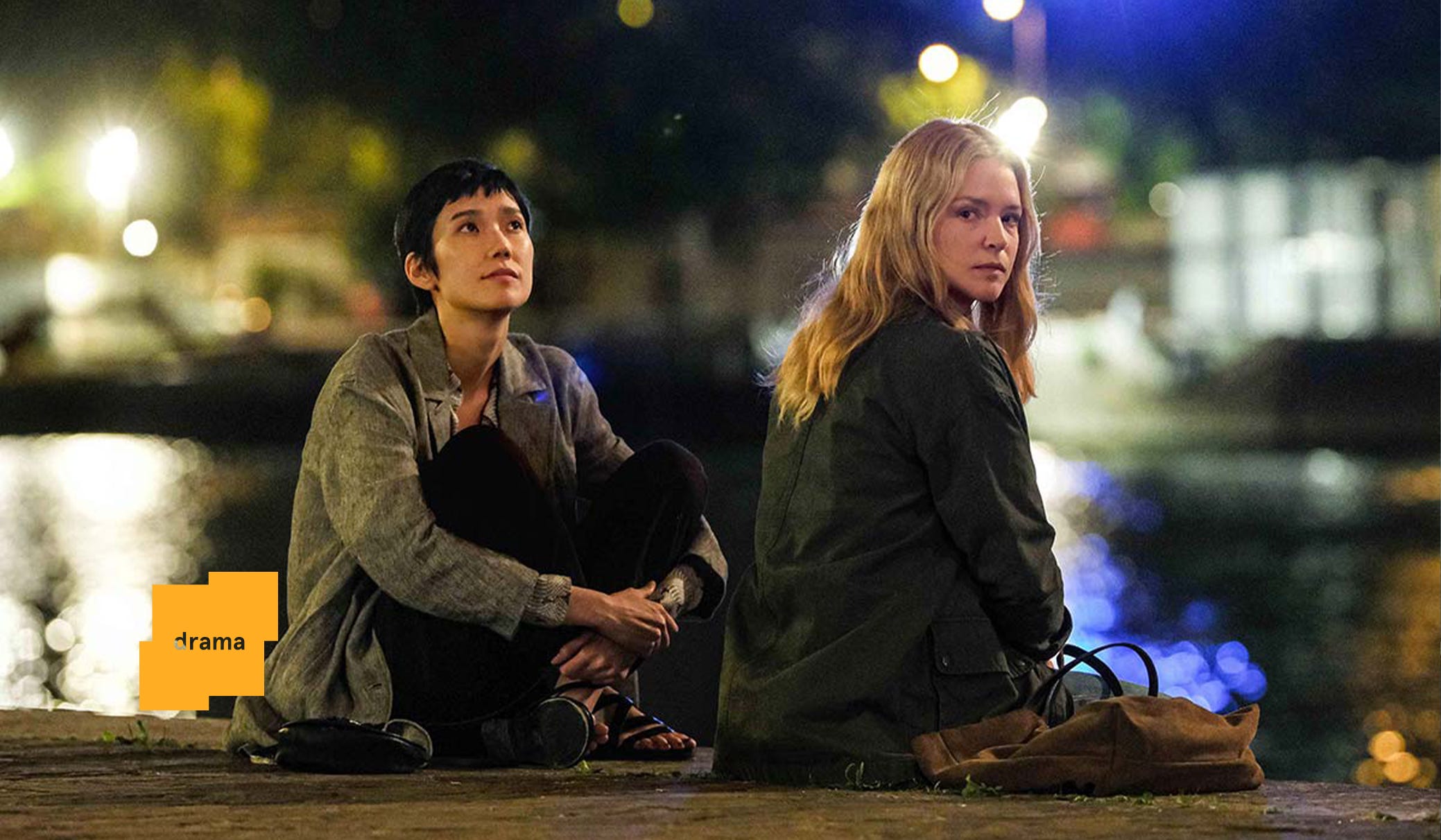
At 196 minutes, All of a Sudden seems like it’d be an epic, and in some ways it is.
But Japanese director Ryusuke Hamaguchi simply allows himself the breathing room to let his story to wander (sometimes literally) into every possible corner of its being. It’s a wonder how the movie breathlessly moves between scenes and conversations as Marie-Lou (Virginie Efira), an overworked French nursing home director, and Japanese playwright and director Mari (Tao Okamoto) meet-cute (in a platonic way) at precisely the right time. It’s the kind of fast friendship that feels epic, even if your paths only intersect for a small period of time. But that’s why the title of the movie, at odds with its cozy, meandering pace, makes sense. All of a sudden your life can change.
Hamaguchi is no stranger to this kind of slow but deliberate storytelling. He returns to the competition after his three-hour, slow-burning meditative breakout Drive My Car rode its Cannes acclaim to a surprise Best Picture nomination five years ago. That film, lived completely in its subtext, finds its emotion in the way we do and don’t speak to each other as we connections come in and out of our lives. It challenges all notions of how to hold an audience’s attention in today’s cinematic environment. So what does he do? He makes an even longer epic drama that tries to emotionally murder you.
Trading Drive My Car’s subtext for raw emotion worn on the characters’s sleeves, Hamaguchi asks what if we just spoke rather than remain silent?
All of a Sudden cozily strolls through the pair’s days-long epic conversation and life entanglement covering everything from healthcare to capitalism to art to dying. It’s as detailed and textured as his other work, but he allows himself to simply say the things he, and his characters, feel. Marie-Lou navigates that balance in her daily grind at “Garden of Freedom”, a senior care facility that specializes in dementia patients. Part of her prerogative as the new director is to institute “Humanitude”, a real-life care philosophy that emphasizes a sense of belonging for the patient when it comes to their care.
The movie starts off as a surprisingly familiar drama about a well-meaning do-gooder who meets resistance from those above and below her in her mission to bring better care to the residents of the facility. Her bosses demand efficiency and cost-effectiveness while the nurses and caregivers emphasize the toll from both staff cuts and the implementation of “Humanitude”, which they worry will do more harm than good. Marie-Lou is empathetic to all of those around her, but also stubborn in her beliefs.
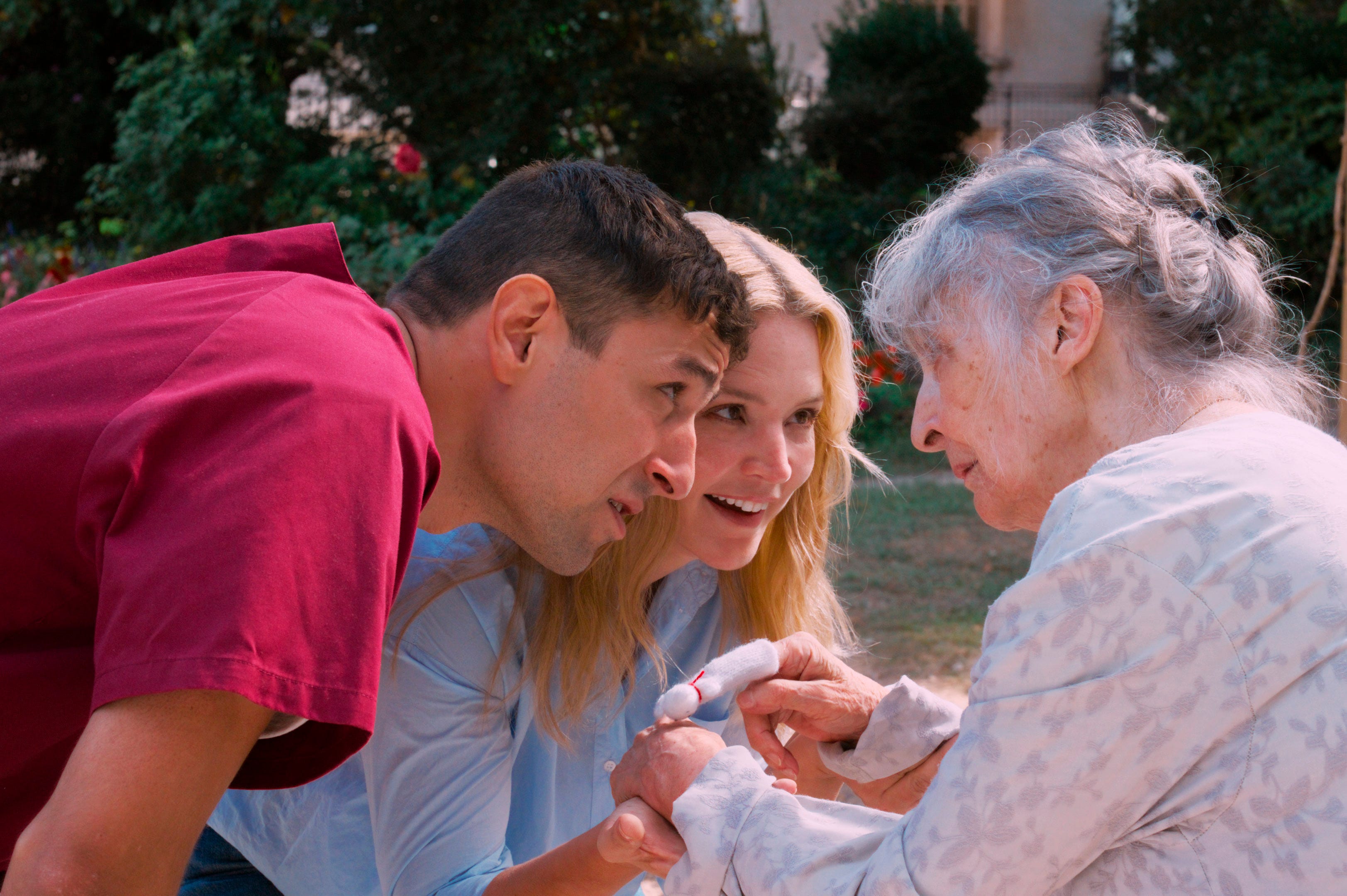
“Humanitude” encourages caregivers to wear casual clothes and to look patients in the eye when speaking to them, shirking the belief that dementia patients aren’t aware of their surroundings. It also encourages verticality, whether standing or walking, which veteran staff like nurse Sophie (Marie Bunel) warn as dangerous. Part of her protest is to continue to wear her scrubs, wary of Marie-Lou and her enthusiasm for change.
Marie-Lou, nearly at the end of her rope, finds renewed purpose when she sees Tomoki (Kodai Kurosaki) running joyously, if not a little recklessly, beside her train. She hops off and follows him to a nearby park where his grandfather Gorô (Kyozo Nagatsuka), an acclaimed Japanese stage actor, and Mari find him using a GPS tracker. As if something in her intuition told her to, Mari invites Marie-Lou to see the play she and Gorô are working on about the abolishment of mental institutions in Italy, a cause dear to Gorô as Tomoki’s caretaker.
At the show, Marie-Lou begins to connect the message, “the impossible is impossible, but only until it becomes possible”, to her own mission at “Garden of Freedom.”
While this sounds trite, Hamaguchi doesn’t simply tell us about the connection. During a nearly twenty-minute sequence, we see the play unfold. The audience, who are given various instruments as a way for them to play whenever they feel the urge, sits rapt as Gorô waxes poetic in Japanese about the emotional toll of such institutions. At one point, Tomoki interrupts, which he happily welcomes.
The bare humanity of the performance that welcomes the instinctive interruptions from the audience, and Tomoki, moves Marie-Lou. She’s further intrigued, specifically by Mari, during the Q&A when she asks what drew her to the project. Mari is equally intrigued as Marie-Lou asks this question in perfect Japanese. Mari, responding in Japanese, reveals her terminal cancer diagnosis. When asked by the crowd to translate in French, Gorô steps in to say:
“From the sound of their voices you know they shared something important.”
That’s where All of a Sudden lives. In the mutual understanding between two humans.
Perhaps, it’s not immediately understood or celebrated by the wider collective, but its necessary for survival. After the performance, Mari and Marie-Lou take a walk. It’s one of those walks all of us have had, perhaps with a friend or a stranger, that takes on a life of its own. That never stops, not because the talking doesn’t end, but because you don’t want to sever the connection. Because you don’t want the blossoming to stop. The pair shares their backgrounds. Mari studied philosophy in France and uses it for her work in the theater, and Marie-Lou studied anthropology in Japan, which is why they’re fluent in each other’s tongue. It’s one of the funny coincidences that feels like fate.
As the conversation transitions to “Garden of Freedom”, Mari sees hands on the empathy pouring out of Marie-Lou for her patients. Conversely, Marie-Lou understands how Mari analyses any given situation with an incisive and determined curiosity. The kind of zest for life that makes her cancer diagnosis all the more devastating. At any given point, the illness can return, a fact that she thinks she has come to terms with. At one point, they spend time white-boarding how capitalism naturally leads to the depletion of the human element of society. However, Hamaguchi, along with the charismatic and Okamoto and Efira’s lived-in performances, never makes it feel like you’re being spoken at. Rather, you feel like a third participant in the conversation.
In the ensuing days, their lives intertwine, though a melancholic undertone takes hold.
From the beginning, we know that this friendship can only be temporary, as big as it feels. It feels episodic, the way that we transition between scenarios at “Garden of Freedom”, learning more about the staff and the residents, Mari and Marie-Lou’s never-ending conversation, and how Gokô and Tomoki slot into their lives. There is a warmth and coziness to the leisureliness in which we experience these few weeks of their lives. Remember, life can take a turn all of a sudden. And it does.
All of a Sudden is yet another entry in the “slow cinema as self-care” canon.
As the movie begins to find its way to the darkest parts of our existence, Hamaguchi makes a grab for the heart more direct than he has before and asks you to hold onto your humanity, even when society continually tries to strip us of it. To those in my screening, I apologize for my ugly crying during the final 40 minutes of the film (though, I’m pretty sure there wasn’t a dry eye in the theater), however it’s simply the power of human connection (or lack thereof) that affects you in the end. And despite the pain and grief, you’ll never want it to end. You’ll want every character to go on as they were. At one point, Mari says:
“I was prepared not to let you go when I met you. That means I lived a good life.”
All I can say is that the feeling is mutual, Mari.