


Mother Mary is in theaters Friday.
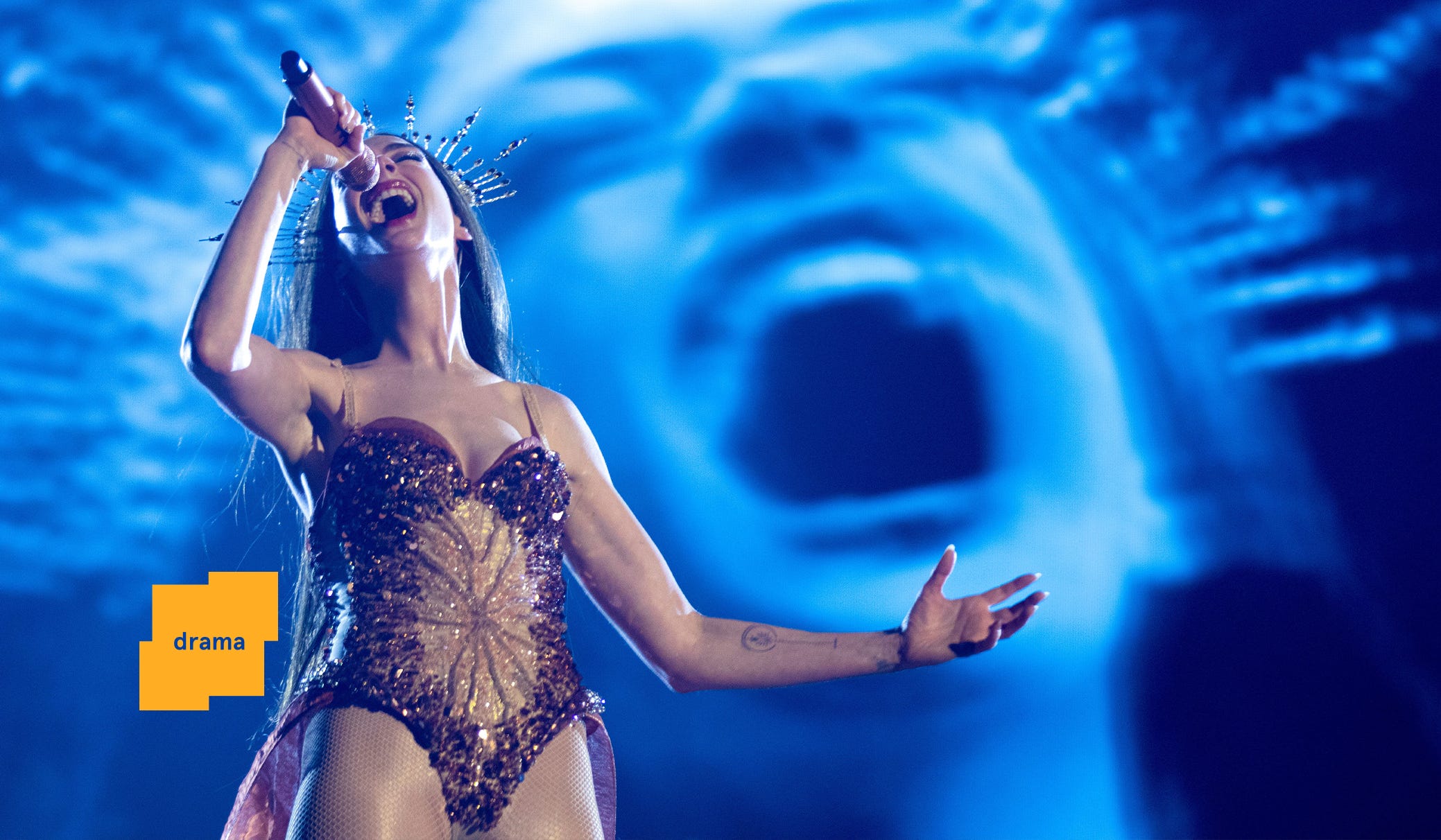
Director-writer David Lowery isn’t the type to make a movie about a pop star, especially in this era where pop stardom has been taken to a magnitude never seen before. It’s akin to worship. But that’s where the brilliance lies within Mother Mary. The movie pulls you in with bright neon lights, earth-shaking bass, and the grandiose scale of an arena concert with Anne Hathaway, as the eponymous pop star, commanding the screen and your attention. However, like any good pop song, that’s just the hook that Lowery uses as a Trojan horse to tell a much deeper and darker story in a way that’s anything but ordinary.
Like any good pop song, that’s just the hook that Lowery uses as a Trojan horse to tell a much deeper and darker story in a way that’s anything but ordinary.
That’s what Lowery has been doing all his career. He will take a subject or a story like a woman in grief (A Ghost Story) or a boy and his imaginary friend (Pete’s Dragon) and approach it precisely at the angle you don’t expect, which is what makes the grounded and subdued first act of Mother Mary all the more baffling. Not that it isn’t engrossing. The way Mother Mary sweeps into her former creative collaborator Sam Anselm’s (Michaela Coel) brooding gothic home and fashion design studio feels like a storm coming against a mountain. For the less meteorologically inclined, that means kaboom.
Muse vs. Creator
There’s a quiet contrast in the way the pair move in the world. Mother Mary, though stripped down to just a simple sweater and sweatpants, has the volatility of a creative in distress. She has a thousand thoughts in her head, but can’t seem to hold onto one. Her horror is that she can fall apart at any moment. Sam, on the other hand, has an eerie calm to her. Mother Mary explains that her sudden reappearance in Sam’s life is because she needs a dress for her comeback performance where she’ll perform her new song. She explains that the one she has “doesn’t feel like me.” To which, with a steely calm, Sam replies, “Because I, above all others, know you.”
Sam (and Coel’s Shakespearean performance) is beguiling in the way that she seems to be at peace, but can easily throw a barb that cuts straight to the heart. Sam agrees to help Mother Mary despite their animosity that remains shrouded. The film presents as a melodramatic relationship drama, as Sam quickly busies herself picking fabrics and probes Mother Mary for information about this comeback performance (the reason for the comeback is equally shrouded in mystery). We learn that the pair had a deep creative partnership stretching back to Mary’s early days in the industry. Her signature halo, which changes from performance to performance, was Sam’s idea. An idea that is stitched permanently to Mary’s identity as an artist. An identity whose ownership comes into question throughout the encounter.
But they’re both careful to never broach the subject of their separation head-on. There’s an unsettling sense of calm.
Although, there are a few inklings of what’s to come later in this reunion. Sam asks Mother Mary to show her the dance to the song, but without music. In all this time apart, Sam hasn’t listened to Mother Mary’s music. The resulting dance, stripped down to its raw physicality, feels like a demonic possession. The sound of Mother Mary’s strained breath and the violent thuds as she throws herself around the room is visceral and unsettling—especially juxtaposed against the echoing silence of the space. It feels supernatural.
The resulting dance, stripped down to its raw physicality, feels like a demonic possession. The sound of Mother Mary’s strained breath and the violent thuds as she throws herself around the room is visceral and unsettling.
Genre Subversion (From Pop to Possession)
As the day turns into night, there’s a palpable shift in the air of the movie. It becomes darker but more alive, like a lightning bolt shot in the dark. Sam tells Mary of the last time she heard her music. As she watches Mother Mary perform on stage after their split, Sam, overcome by emotion at seeing her own artistry in front of her without credit, bites down splintering her wisdom tooth. Like a storybook, Lowery shows the incident unfold before us like a body horror. Later that night, Sam regales Mary of the tale of a ghost, manifested as a simple tract of red fabric, awakening her that night.
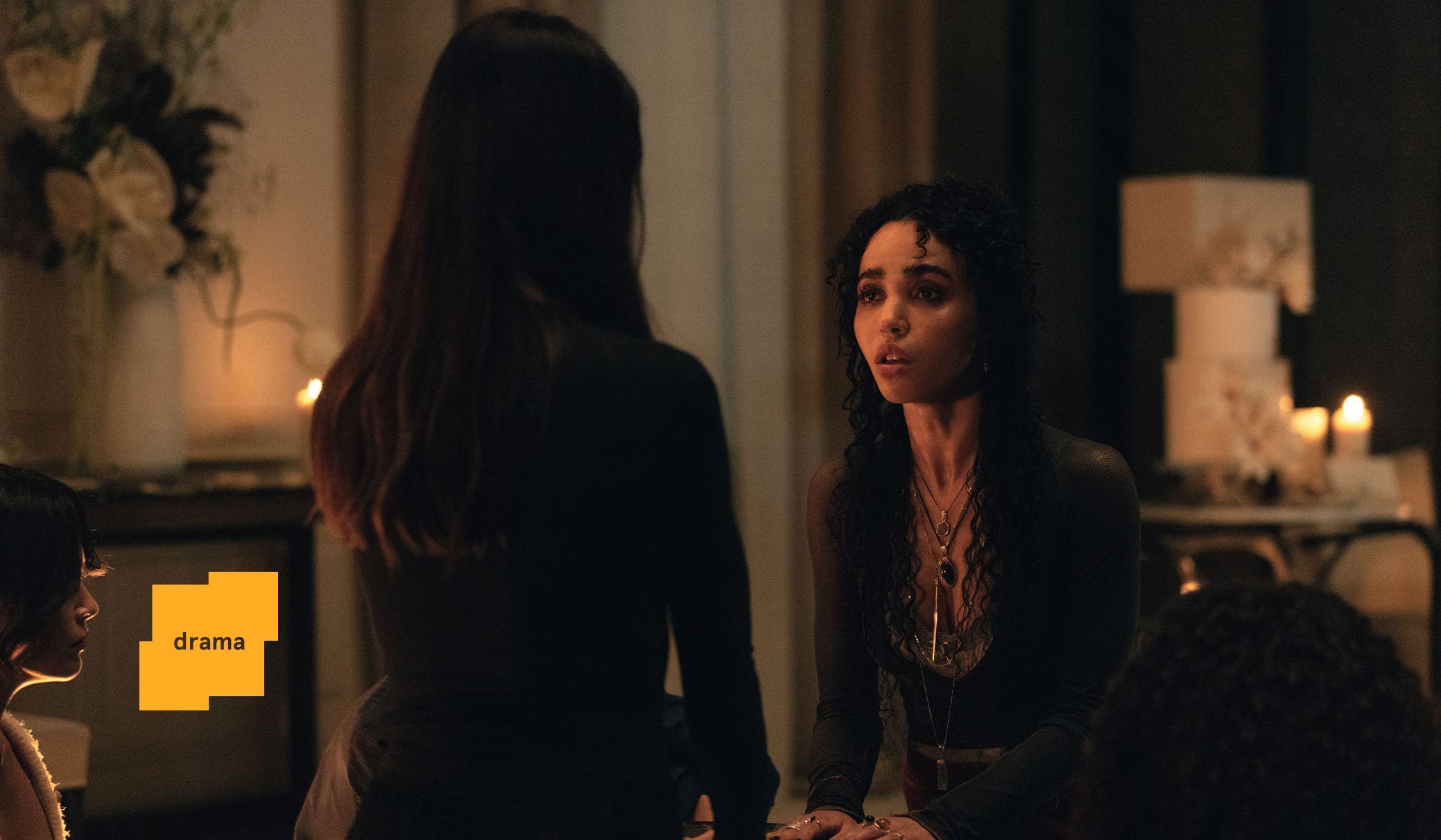
Mary listens on with horror as she realizes that the ghost that Sam saw may be the same the she once saw through a sort of medium played by FKA Twigs. The ensuing scene, the best of the movie, feels more akin to The Exorcist than the pop opera the movie started as. Twigs, contorting herself around the room warning of some being coming for Mother Mary, is otherworldly extraordinary and catapults the movie into a full gothic horror where the feeling of dread pervades laced with the haunting beats of Mother Mary’s music. Her contortions echo Mary’s earlier silent dance, but here the possession becomes literal. It begins help us to unravel exactly what Lowery is trying to communicate with the story.
Jack Antonoff, Charli XCX, and FKA Twigs all contributed music to the soundtrack that becomes the backbone of Mother Mary’s tale of artistic and physical burnout. In an awe-inspiring scene, Mary goes from concert to concert, ushered by a crowd of dancers as we watch the toll of constant touring take hold. The glitchy, abrasive synths underline the visceral toll taken onscreen. The scenes move like a dance but keep the same gothic tone as the rest of the movie. Cinematographer Andrew Droz Palermo stays true to the bright lights of a concert, but staying true to the movie’s gothic tone disorients you with the camera’s movements. It’s a body horror, what artists do to keep up pace with their demanding schedule.
Mother Mary lays itself threadbare by the end giving a cutting (at times, quite literally) appraisal of artistic relationships and how for all their fruit, can lead to self-destruction.
These traded stories begin to form a picture of what the movie is about. Though Lowery has never been one to give easy explanations of his work, Mother Mary lays itself threadbare by the end giving a cutting (at times, quite literally) appraisal of artistic relationships and how for all their fruit, can lead to self-destruction. As Mother Mary finds herself falling apart, Sam finds herself building walls. It’s not coincidence that her home and fashion studio looks like a fortress. Lowery, with the horror of the movie, compares partnership with posession, and eventually exorcism. Literally giving someone else control of your body and in return giving some of yours.
Mother Mary is hard to define. It is a relationship drama, a ghost story, a musical, a thriller. Or perhaps, it is a genre all its own. For me, it is a liturgical horror—a film that treats the act of collaboration with the same dread and devotion as a haunted cathedral. What is clear is that David Lowery is clear-eyed in his search for raw intimacy in partnership. And to find that intimacy involves laying your ugliest impulses out in front of your collaborator. Only then can the ghost of all your self doubt, your history, and your baggage be exorcised.