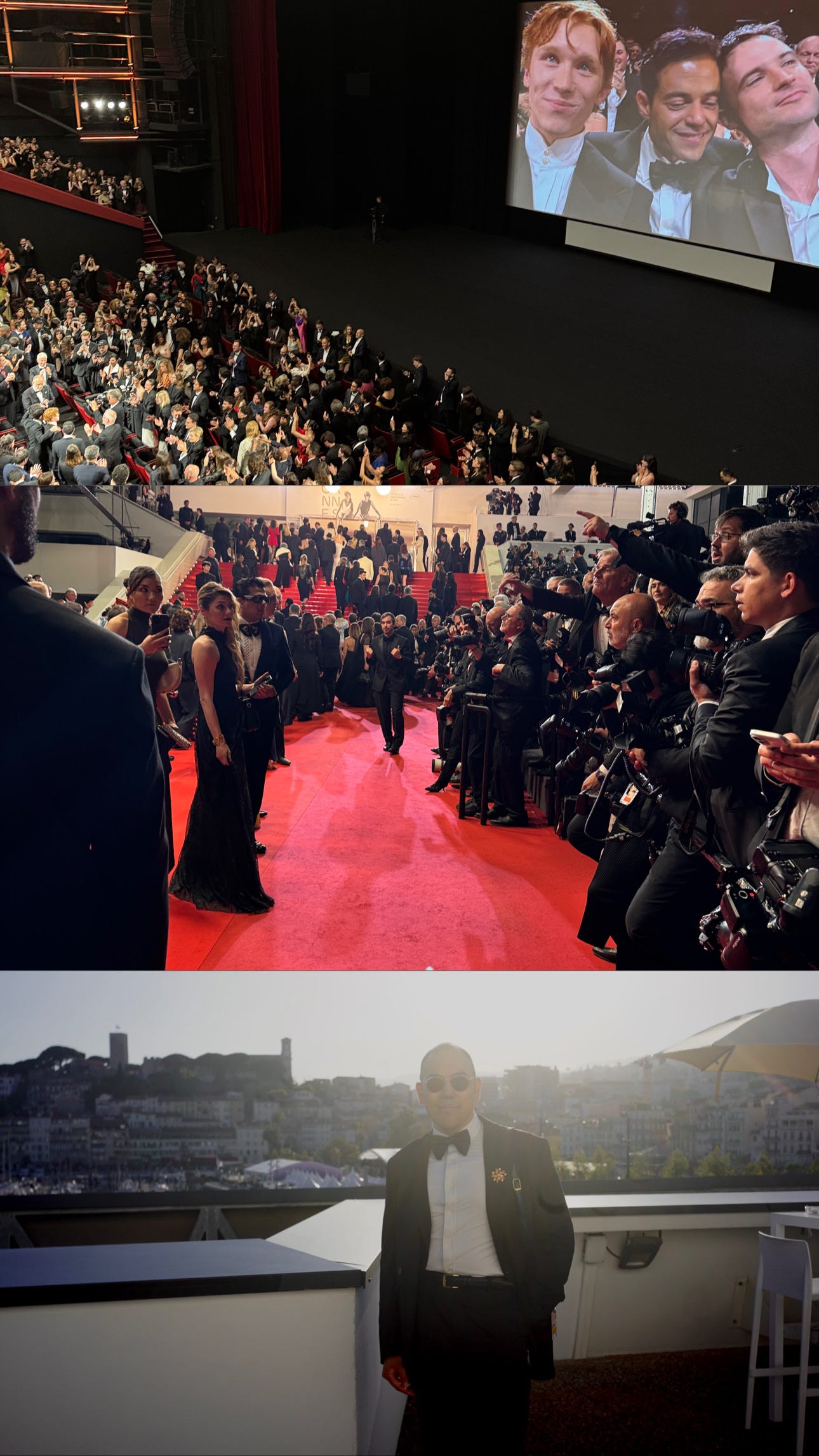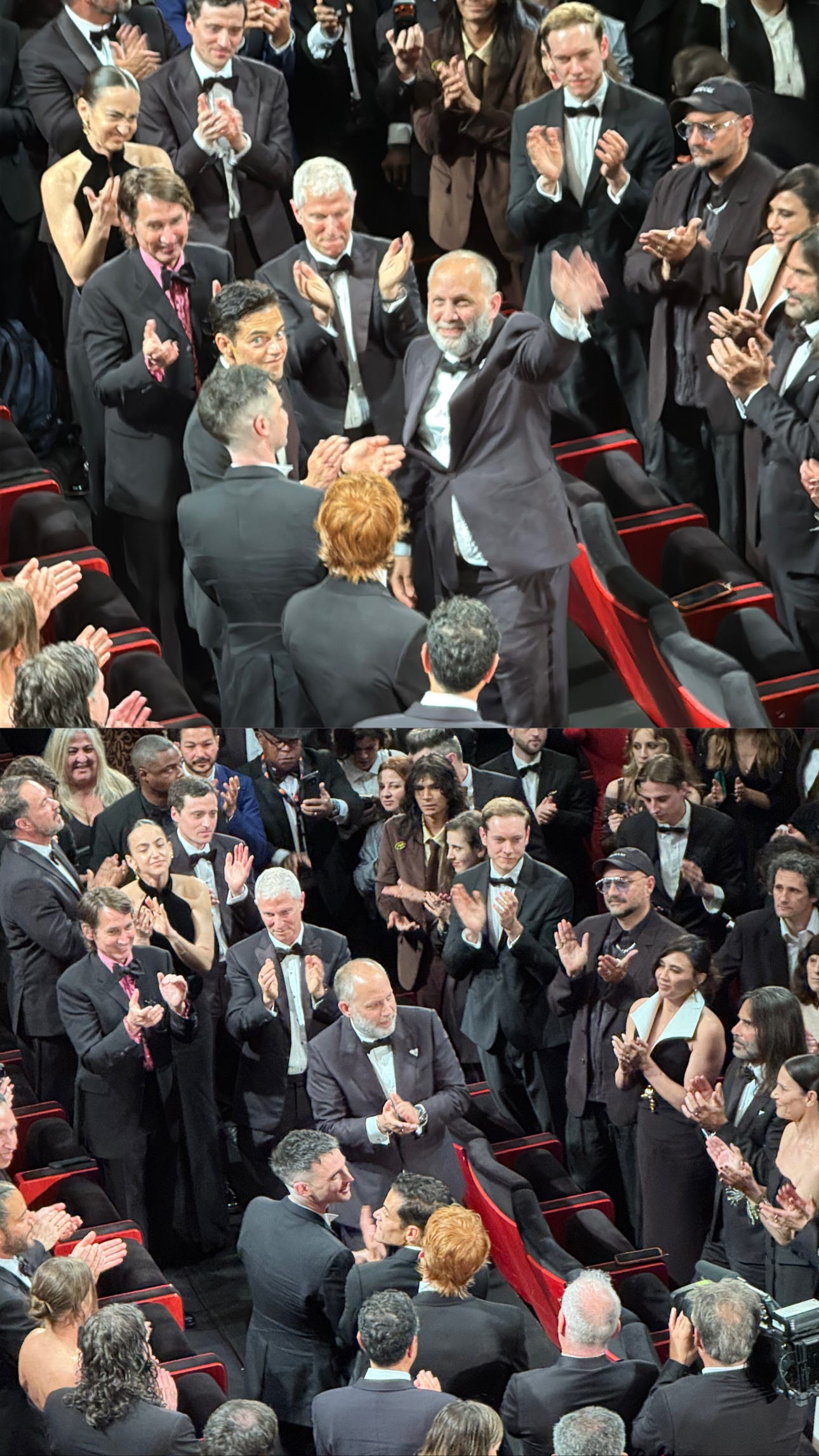

I was fortunate to attend the world premiere of The Man I Love from American director Ira Sachs (a fellow New Yorker!) here, at Cannes. Some photos from the premiere below, as well as my full review of this magnificent masterpiece. — Karl
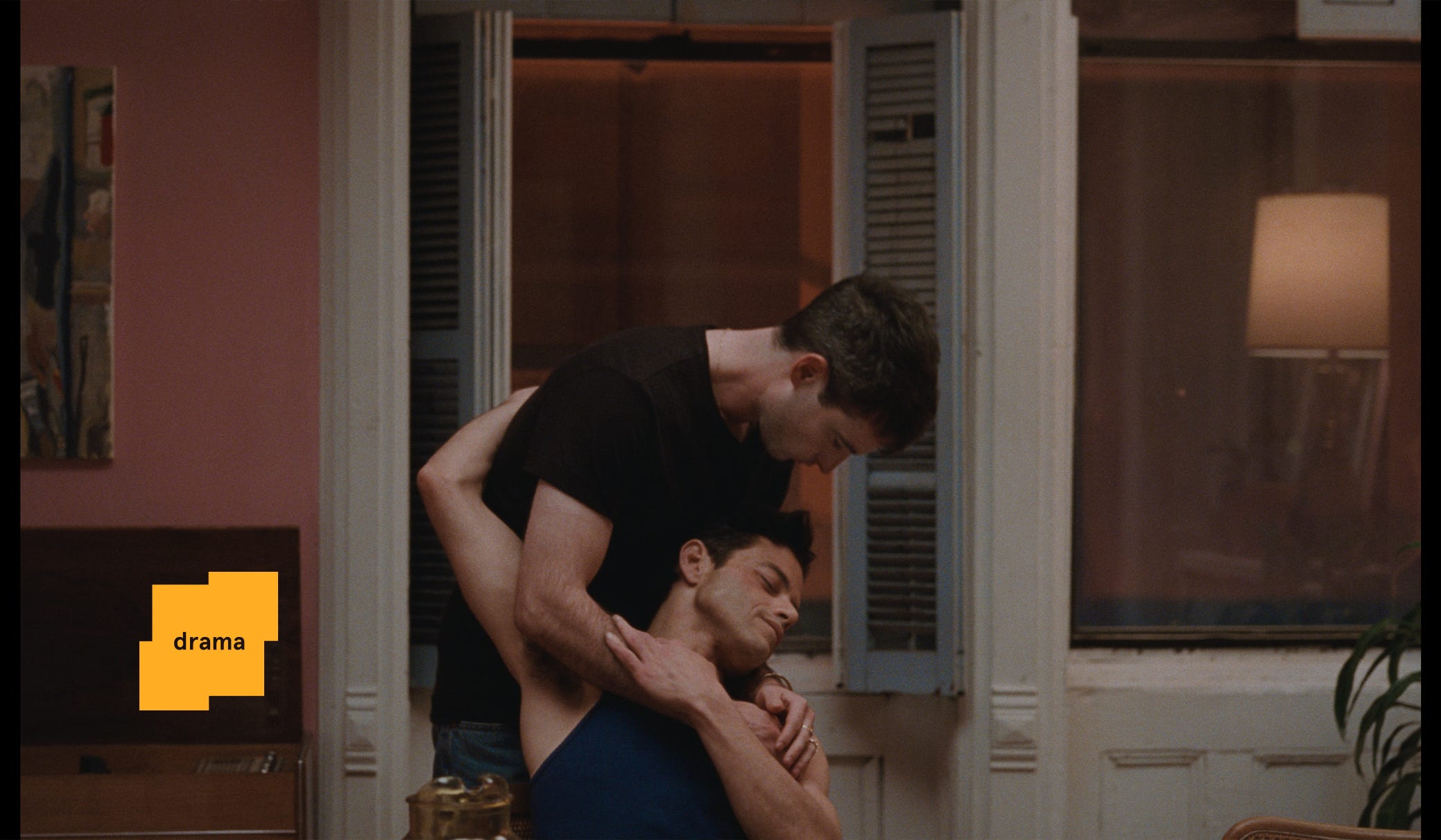
Early in The Man I Love, Ira Sachs’ first film in competition at Cannes in seven years, Jimmy George (Rami Malek) is brought on stage by the drag queen emcee to perform a song. Taking the mic in the hazy, dimly lit gay bar, he croons out “The Man I Love” by George and Ira Gershwin. He sings:
He’ll bulid a little home
Just meant for two
From which I’ll never roam
Who would? Would you?
Not far, Jimmy’s partner Dennis (Tom Sturridge) watches on, softly crying. Whether they’re tears of joy or sadness is up to interpretation. What we do know is there’s history and knowing there. To steal a quote from fellow Palme d’Or contender All Of A Sudden (review here), “from the sound of their voices you know they shared something important.” Except here, you see it in their quiet actions.
That’s where much of The Man I Love lives, in the moments between life’s big moments.
It’s like a memory that you can’t quite get a grasp of, but the feelings are there clearly, as conflicted as they may be. But that’s just the truth of Sachs’ detailed and textured rendering of the New York City art scene in the 1980s and the queer people that inhabited it. It’s mesmerizing and messy and joyous and dramatic, just like Jimmy, who’s recently returned to acting after being gone for some unspecified reason.
There’s a mystery about him that’s intriguing, particularly to Vincent (newcomer Luther Ford in a stunning debut), who just moved into the apartment below Jimmy and Dennis. He’s enrapt when he meets Jimmy. First in the stairwell, carrying a mattress up the narrow stairs, and again at a house party where Jimmy demonstrates how to perform masculinity and femininity with body language. It’s like watching a master at work. In the moment, we know he is a man who lives and breathes his craft.
We’re just as enrapt as Vincent and the partygoers thanks to Malek’s performance (atoning for his sins in Bohemian Rhapsody).
It exudes charisma and bravado, but, most importantly, musicality. There’s a rhythm to the way he moves through the world, juxtaposed against the steadiness of Dennis. They complement each other. Jimmy burns bright. Dennis keeps the fire from burning out of control. Vincent, on the other hand, is desperate to join whatever tempo Jimmy is on. To feel that same burn.
The mystery of Jimmy is unraveled a bit when his sister (Rebecca Hall) and brother-in-law (The Bear’s Ebon Moss-Bachrach) visit. In private, she says, “It’s tough living, and Jimmy’s doing that. More than anything else, I want my son to see that.” To which he replies, “It’s not gonna last.” And we understand that as well, it’s New York in the 80s after all. Like all of Sach’s movies, The Man I Love is never overt about its themes, even going as far as never using the term “AIDS” at any point. But we know it’s there. So do the characters. It casts a pall over the joyousness of the artists surrounding Jimmy and Dennis.
In one of many marvelous scenes with the artist community, some of whom Jimmy is working with on a play, each person takes a turn singing a song. We know nothing about that, but we feel the warmth and admiration of the room. It is artistic and queer solidarity personified. In the background, Vincent watches on in wonder, wordlessly willing himself into this life. In another, we watch them rehearse the play. We bear witness to the artistic process and collaboration, just like Vincent. It’s intoxicating and something worth fighting for.
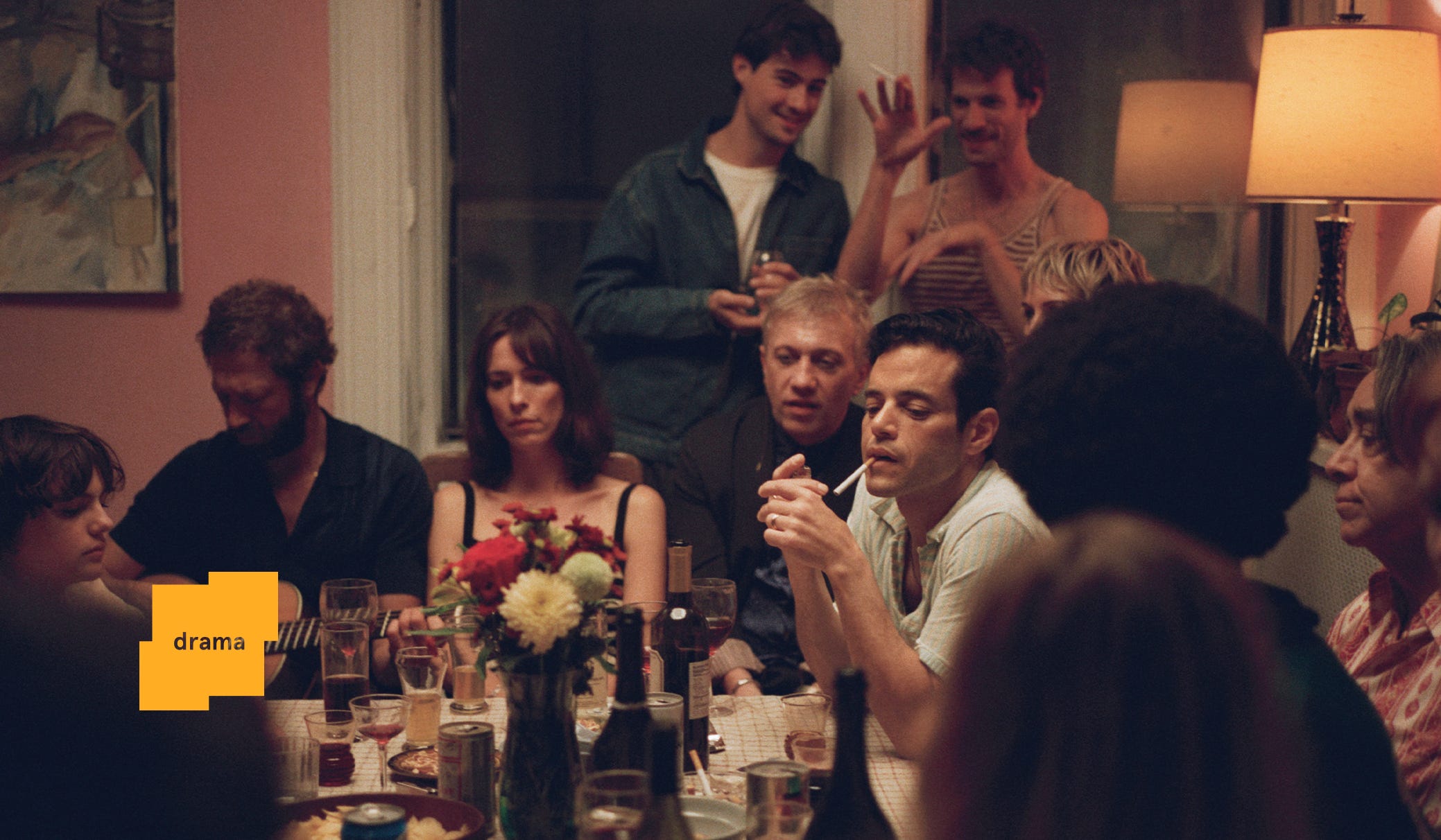
The three men, Jimmy, Dennis, and Vincent, are all fighting for that joy in different ways and for different reasons.
Jimmy, facing what could potentially be his final act, desperately wants to continue as he was. Dennis, the devoted lover and perhaps the one person who understands Jimmy, can’t fathom life any differently. And Vincent, new to his freedom, wants to love and be loved. They’re all desperate to hold on to the world, even when it seems like it’s crashing down around them. But Sachs, never one for dramatics, allows us to feel these feelings rather than prescribing to us. He lets them wash over you like a wave of empathy.
Rather than a story, The Man I Love is a mood. It’s a time and place. One with some of the highest highs of queer art and expression and the lowest lows.
The magnificence and melancholy are packaged up in this small story and sliver of time. People we never get to learn much about, but care for and yearn to understand nonetheless, feel like they come into our lives and we (just like them) don’t want to let them go. That’s because in their small touches and stolen glances, we know and we understand. Perhaps we can empathize, but more than anything, we can feel.
Although this time and place existed, it feels like a dream. Underlined by Josée Deshaies’ warm cinematography and Sachs’s gentle direction, The Man I Love builds a world that we wish could have continued to exist in different circumstances. It’s marvelous that in an era of such pain, Sachs finds the warmth, as do Malek, Sturridge, and Ford, who all do sensational work explaining their character’s inner lives, often without a single word. They make you miss them when they leave. They make you hope that they’re still singing and dancing to this day.